
-
HEALTH CARE
 Aveline-Hand-Sanitizer-Mint
 Aveline-Hand-Sanitizer-Mango
 -
EYE CARE
 Aveline-Eyebrow-Growth-Serum
 Aveline-Eyelash-Serum
 -
SKIN CARE
 Aveline-herbal-moisture-cream
 Aveline-colagen-moisture-cream
 -
Hair care
 Aveline Hair Growth Stimulator
 Aveline Beard Growth Treatment
News - events
Why Do Women Have Chest Hair?
Many people believe that chest hair only appears in men and that women who have chest hair have an abnormal condition. In reality, chest hair in women is relatively common and is often associated with genetics, hormones, and natural physiological changes. So, why do women have chest hair? Let’s explore the causes of this condition in the article below.
Why Do Women Have Chest Hair?
Here are some common reasons why women develop chest hair.

1. Everyone Has Hair Follicles
It is important to understand that hair follicles are present throughout the human body, including in women.
However, the differences between men and women lie in hair thickness, texture, density, and color. Most women have fine, thin, and lightly colored body hair that is difficult to notice. However, certain hormone-sensitive areas, such as the pubic region, underarms, around the nipples, and chin, may develop more noticeable hair.
Read more: What Does Chest Hair Mean?
2. Hormones
.png)
One of the most common reasons women develop chest hair is the influence of androgens, commonly known as male sex hormones. Women also produce testosterone, but typically at lower levels than men.
Hormones play an important role in regulating energy, stimulating hair follicle growth, and maintaining bone and muscle health. When androgen levels increase slightly, the hair follicles around the nipples may produce hair that is darker, longer, and coarser than normal fine hair.
Read more: Chest Hair in Women
3. Hormonal Changes
.png)
In women, hormone levels fluctuate throughout different stages of life. These changes can explain why chest hair may become more noticeable over time.
- Puberty: The body begins producing higher levels of sex hormones, and hair may develop in the pubic region, underarms, and around the nipples. This is a completely normal process, although some people may prefer to remove hair in these areas.
- Pregnancy: Levels of progesterone and estrogen increase, and hair growth patterns may change. Hair on the abdomen, chest, and arms may become more noticeable. After childbirth, this excess hair often gradually decreases on its own.
- Perimenopause and menopause: Estrogen levels typically decline, making androgen activity relatively more prominent. During this stage, some women may notice increased hair growth on the chin, upper lip, and chest.
4. Genetic Factors
Genetics is another important factor. If your mother, sisters, or other female relatives have hair around their nipples, you may be more likely to develop it as well.
This does not necessarily indicate an underlying medical condition. It may simply be an inherited biological characteristic.
5. Polycystic Ovary Syndrome (PCOS)
.png)
One medical condition that can contribute to chest hair growth in women is polycystic ovary syndrome (PCOS).
PCOS can cause elevated androgen levels, leading to increased hair growth in areas such as the chin, abdomen, back, and chest.
In addition to chest hair, PCOS may be associated with:
-
Acne.
-
Unexplained or difficult-to-manage weight gain.
-
Irregular menstrual periods.
-
Difficulty getting pregnant.
If your chest hair becomes dark, coarse, or excessive and you also experience these symptoms, you should consider consulting a gynecologist or an endocrinologist.
Read more: Aveline Eyelash Growth Product
6. Medication Side Effects
.png)
Certain medications may contribute to increased chest hair growth in women. These include some hormonal medications, immunosuppressive drugs, corticosteroids, and medications containing androgenic compounds or testosterone.
The effects depend on the specific medication and individual response. If you notice increased hair growth after starting a medication, consult your doctor. They may consider adjusting the dosage or switching medications if appropriate. Do not stop prescribed medication without medical advice.
7. Hormonal Imbalances and Lifestyle Factors

If chest hair becomes more noticeable, it is important to consider other factors, including genetics, natural hormonal changes, and possible underlying medical conditions, rather than assuming that lifestyle alone is responsible.
Is Chest Hair in Women Dangerous?

However, you should seek medical advice if you notice any of the following:
-
Sudden or rapid growth of dark, coarse chest hair.
-
Excessive hair growth on the face, abdomen, or back.
-
Irregular or absent menstrual periods.
-
Severe acne or significant hair loss on the scalp.
-
A deeper voice or other signs of masculinization.
These symptoms may indicate an underlying hormonal condition that requires evaluation.
Aveline Chest Hair Growth Product for Women
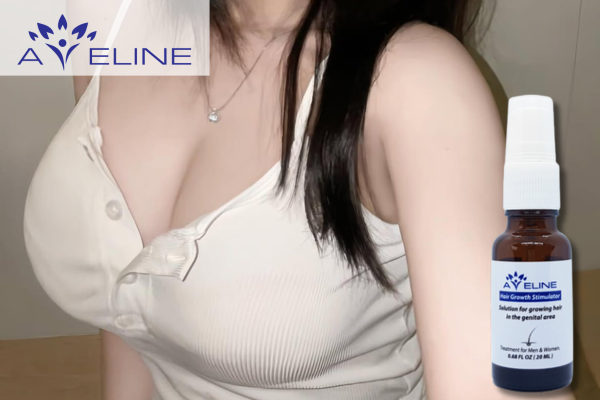
The Aveline Chest and Abdominal Hair Growth Product is marketed as an option for women who wish to encourage chest hair growth or improve the appearance of sparse, thin, or uneven hair caused by individual characteristics, hormonal changes, or genetics.
For some people, chest hair is not merely a cosmetic concern but also a personal expression of body confidence and individuality.
According to the product's marketing claims, Aveline contains herbal extracts and natural essential oils intended to nourish hair follicles, stimulate hair growth, and moisturize the skin, thereby creating favorable conditions for healthier hair.
However, the effectiveness and safety of these claims should be independently verified. Natural ingredients do not automatically guarantee safety or effectiveness, and there is insufficient evidence here to establish that this product reliably stimulates chest hair growth in women. If excessive hair growth is related to a hormonal condition, medical evaluation is more appropriate than relying on a cosmetic product.
Conclusion
This article Aveline has explained why women develop chest hair and the factors that may contribute to it.
Chest hair in women is a relatively common biological characteristic, often influenced by genetics, normal hormonal changes, and individual differences in hair follicle sensitivity. In most cases, it is harmless and does not indicate a medical problem.
However, sudden or excessive hair growth, particularly when accompanied by irregular periods, severe acne, or other hormonal symptoms, may warrant medical evaluation.